CubeSat Satellite 2.0
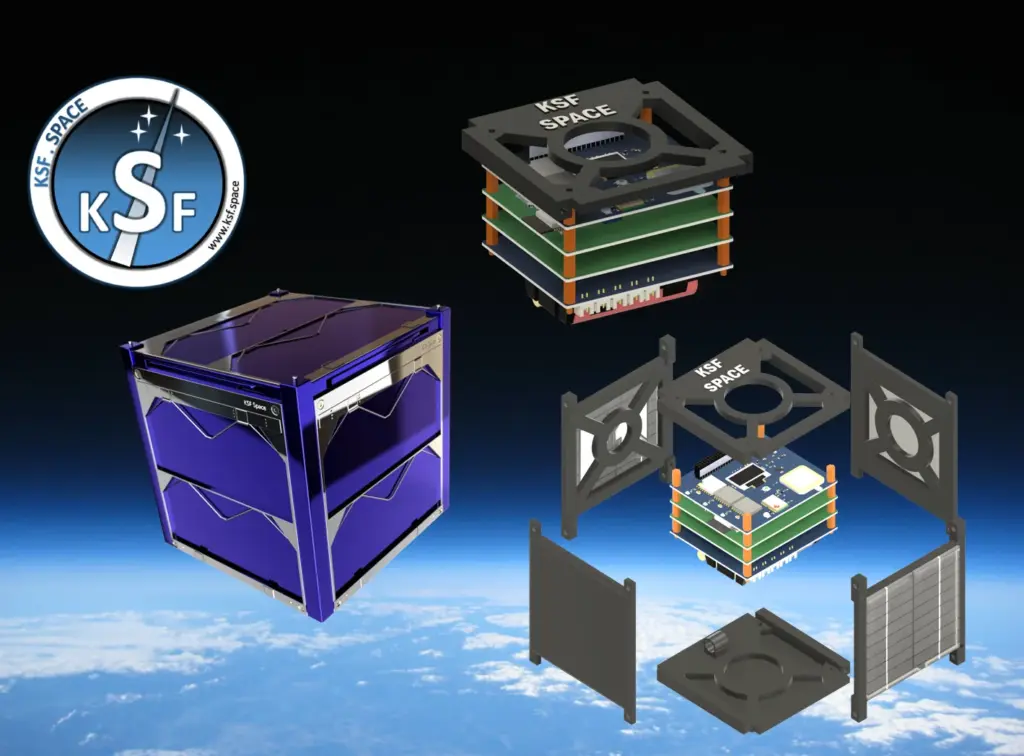
The Definitive Guide to Cubesat Satellite Design, Development, and Launch
The aerospace industry is undergoing a historic shift. For decades, entering Low Earth Orbit (LEO) was exclusive to billionaire corporations and national governments. Today, miniature satellite technology—specifically the Cubesat Satellite—has democratized space access. Standardized in 10×10×10 cm units (known as "1U"), these miniature satellites allow academic institutions, research facilities, and commercial enterprises to conduct orbital missions at a fraction of traditional costs.
However, moving from concept to launch requires specialized engineering, strict adherence to global space standards, and comprehensive mission planning. That is where KSF Space comes in. As an industry leader in small satellite technology and professional space education, KSF Space empowers universities and R&D companies to design, test, and deploy flight-ready systems.
What is a Cubesat Satellite and Why is it Transforming Space R&D?
A Cubesat Satellite is a class of miniaturized satellite built using standardized volume units. Formats range from a compact 1U (1 kg–1.33 kg class) up to 3U, 6U, 12U, or 16U platforms carrying complex scientific payloads.
The NewSpace Revolution
Unlike traditional billion-dollar satellites that take a decade to build, a modern Nanosatellite Satellite relies on commercial off-the-shelf (COTS) components, standardized frames, and modular architectures. This shift dramatically reduces financial risk and speeds up development timelines from years to months.
Modularity: Interchangeable bus boards, power systems, and communications modules.
Cost-Effectiveness: Shared launch options (piggyback payloads) minimize deployment expenses.
Rapid Prototyping: Agile hardware-in-the-loop (HITL) testing accelerates iteration.
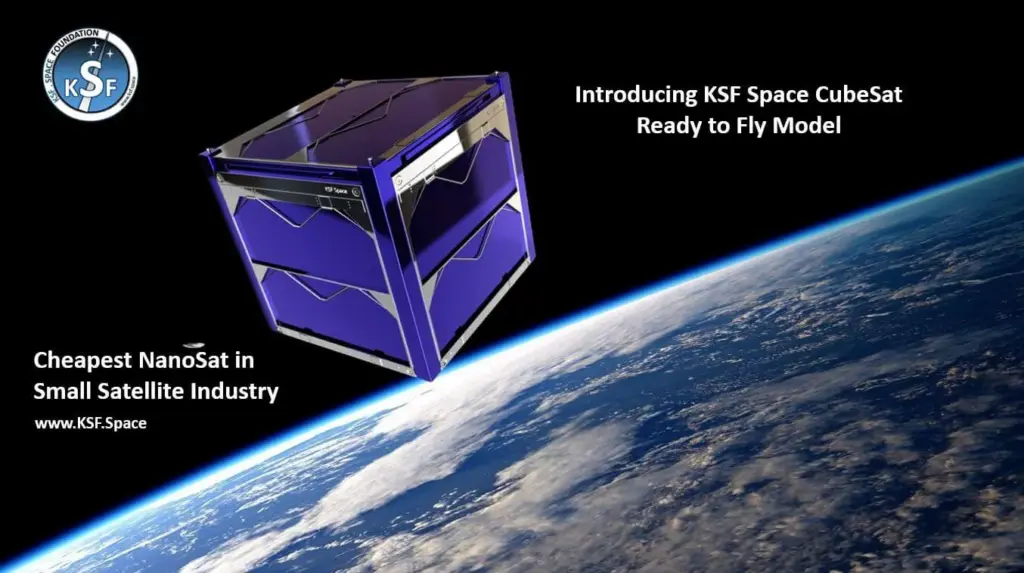
Demystifying Cubesat Satellite Price, Costs, and Financial Planning
Financial viability is often the deciding factor for academic departments and R&D budgets. Understanding the financial breakdown of a small satellite mission helps organizations allocate resources efficiently.
| Mission Phase | Estimated Cost Range (USD) | Primary Cost Drivers |
|---|---|---|
| Cubesat Satellite Kit Price (Educational/Training) | $5,000 – $25,000 | Structure, Basic Sensors, OBC, Power Board, Ground Station Software |
| Cubesat Satellite Design & Payload Integration | $30,000 – $150,000 | Custom Sensors, Solar Arrays, ADCS, Environmental Testing (TVAC/Vibe) |
| Orbital Launch Services & Deployment | $40,000 – $120,000 (per U) | Deployer Hardware, Launch Provider Slot, Frequency Licensing, Debris Mitigation |
| Full Mission Operational Life | Variable | Ground Operations, Data Processing, Software Maintenance |
What Drives the Overall Cubesat Satellite Cost?
-
Component Quality & Space Qualification: Unqualified COTS components lower the upfront Nanosatellite Satellite Price, but increase risk. Space-qualified components undergo Thermal Vacuum (TVAC) and Electromagnetic Compatibility (EMC) testing, raising costs but ensuring orbital survival.
-
Attitude Determination & Control System (ADCS): Passive stabilization using magnets is affordable, whereas active 3-axis reaction wheel pointing for Earth imaging adds complexity and expense.
-
Launch Logistics: Rideshare piggyback deployment costs vary based on target orbit (e.g., 400 km ISS deployment vs. 550 km Sun-Synchronous Orbit).
If you are looking to buy a Cubesat Satellite, partnering with KSF Space gives your team access to affordable kits, streamlined payload integration, and cost-efficient hardware sourcing
How KSF Space Empowers Universities and R&D Laboratories
Building a flight-ready spacecraft requires more than just reading blueprints. Without expert guidance, first-time missions face high failure rates due to power dropouts, thermal issues, or loss of communication links.
KSF Space bridges the gap between theoretical classroom knowledge and real-world orbital execution.
1. Hands-On Hardware Kits and Systems
KSF Space offers standardized hardware kits designed for university aerospace labs and enterprise R&D teams. These systems feature:
Electrical Power Systems (EPS): Multi-junction solar cells, battery management, and smart power distribution units.
On-Board Computers (OBC): Reliable microcontrollers running real-time operating systems.
Communications Subsystems: UHF/VHF and S-band transceivers configured for standard ground stations.
2. Comprehensive R&D Project Support
Whether your institution is developing AI-driven edge computing payloads, atmospheric sensors, or IoT mesh relay systems, KSF Space provides structural engineering, thermal analysis, and systems integration support to help meet mission requirements.
3. Industry Credibility Across All Sectors
KSF Space has built strong credibility within space education, academic research, and international technology transfer. By partnering with academic bodies, space agencies, and private technology firms worldwide, KSF Space helps organizations turn conceptual ideas into orbital realities.
Professional Education: Nanosatellite Engineering Professional (NEP) Courses
One of the biggest obstacles in the NewSpace industry is a shortage of trained personnel. Traditional aerospace engineering programs often focus on large, traditional systems rather than agile small satellites.
To address this gap, KSF Space developed the Nanosatellite Engineering Professional (NEP) certification.
Why Enroll in the NEP Certification Program?
World-First Curriculum: Designed by aerospace engineering experts specifically for small satellite architecture.
End-to-End Skill Development: Covers Phase A mission planning through Phase D verification, launch coordination, and ITU frequency licensing.
Career Alignment: Gives university students, researchers, and professional engineers a globally recognized credential in satellite systems engineering.
Step-by-Step Architecture of a Cubesat Satellite Mission
-
System Definition: Choosing between 1U, 3U, or 6U configurations based on payload size, weight, and power limits.
-
Subsystem Integration: Interconnecting the On-Board Computer, EPS, solar panels, radio transmitters, and sensors.
-
Environmental Verification: Subjecting hardware to acoustic vibration testing and thermal vacuum chambers to simulate launch and orbital conditions.
-
Launch Integration & Operation: Packing the hardware into standardized deployers and managing satellite telemetry via ground stations once in orbit.
Frequently Asked Questions (FAQ)
What is the typical Cubesat Satellite cost for a university project?
Costs depend on whether the project is an educational ground test or a full orbital mission. A educational Cubesat Satellite kit price for classroom training ranges from $5,000 to $25,000. Complete flight-qualified hardware, payload development, and launch integrations generally range from $80,000 to $250,000+ depending on unit size and mission scope.
Can KSF Space assist our university in launching its first satellite?
Yes. KSF Space offers end-to-end support for academic institutions, including mission planning, hardware acquisition, NEP training, testing protocols, and launch provider integration.
What is the Nanosatellite Engineering Professional (NEP) course?
The NEP program is a globally recognized engineering certification offered by KSF Space. It covers the entire lifecycle of a Nanosatellite Satellite—from mission design and system assembly to frequency regulatory compliance and orbital operations.
How do I buy a Cubesat Satellite kit or start an R&D partnership with KSF Space?
You can get in touch directly with the engineering team at KSF Space by emailing [email protected] to discuss custom hardware setups, educational programs, or corporate partnerships.
Launch Your Space Mission with KSF Space
The modern space race is defined by accessibility, rapid innovation, and practical education. Whether your university aims to launch a 1U research project or your company needs a specialized platform for advanced technology demonstration, KSF Space provides the hardware, expertise, and training to turn your mission into reality.
Don't let technical obstacles delay your project. Contact KSF Space today to discuss your satellite design, explore hardware kits, or register your engineering team for upcoming NEP certification cohorts.
Website: www.ksf.space
Contact Email: [email protected]
As featured on

KSF Space Foundation is a USA non profit organization registered in Delaware #5605031 offers support in numerous areas,
Working hours
Mon-Fri: 9 AM – 5 PM
Saturday: 9 AM – 5 PM
Sunday: closed
Quick Link